Our Products
Approved Installers
More Information

Find Your Perfect Door...

Free, Fast Delivery Over £750

10 Year Guarantee

Price Match Promise

3500+ Doors Sold A Week

A Tree Planted For Every Review
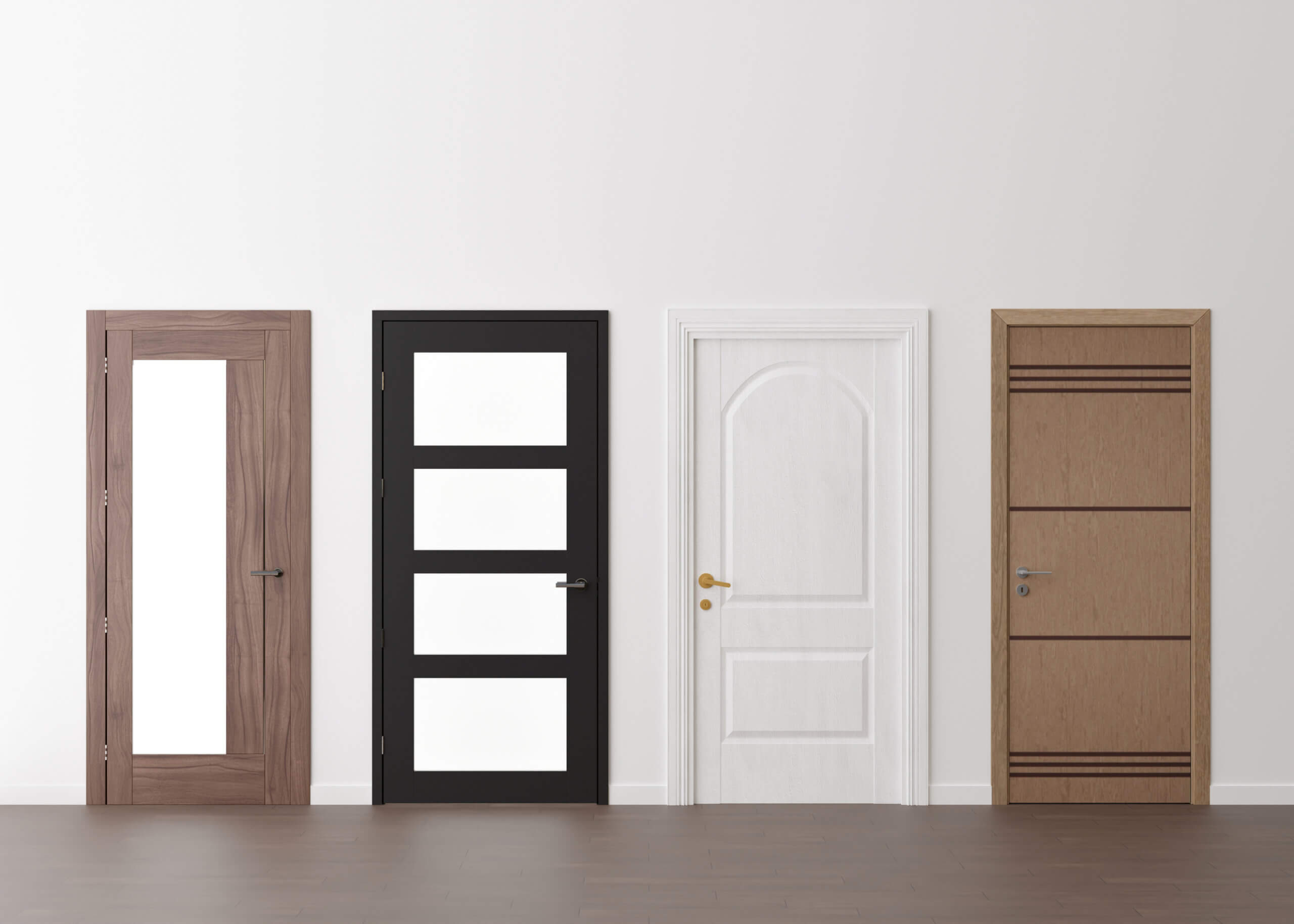
Choosing an internal door is not just about style. For homeowners investing in a proper renovation, smaller developers managing a spec and installers who don’t want surprises on site, the real question is… what is the door actually made from?
That matters more than many people realise.
Much like external doors, the construction of an internal door affects how it feels, how it sounds when it closes, how durable it is in everyday use, how much it can be trimmed and whether it is suitable for locations where fire protection is needed.
Across the Climadoor internal doors range, you’ll find a mix of moulded interior doors, engineered solid core doors, internal folding doors, French doors, glazed door designs and FD30 fire doors, each built with a different job in mind and most are available as either unfinished doors, pre-finished or primed depending on how much work you’re up for on site.
So, if you have ever wondered what sits beneath the veneer, skin or primer of interior doors, this guide is here to walk you through it.
Two doors can look almost identical in a photo and behave very differently once installed.
One might be lighter and more economical, making it a practical choice for straightforward internal use. Another might feel denser, sturdier and more substantial, making it better suited to high-traffic rooms or buyers upgrading from entry-level joinery. Fire doors step into a different category again, because they’re designed as performance products, not just decorative ones.
That is why understanding door construction helps you buy more intelligently. It also helps installers and specifiers avoid common issues around trimming, hardware fitting, frame choice and compliance-sensitive locations.
The answer depends on the range.
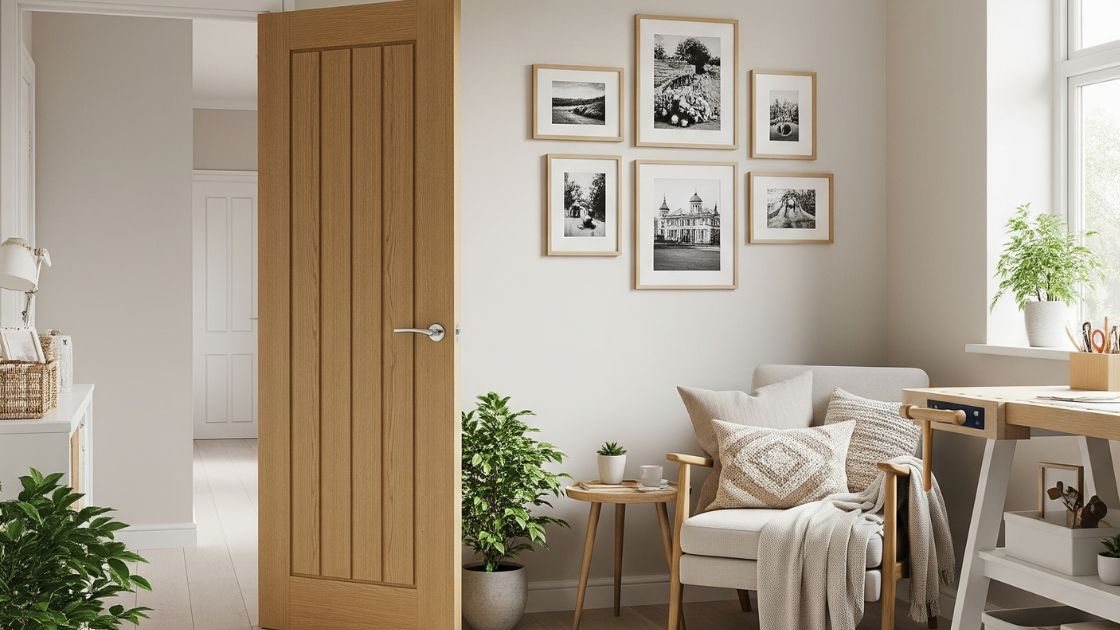
In Climadoor’s solid oak collection, solid internal oak doors are made using a engineered oak core, created by binding together layers of oak to form a stable core, which is then encased in a premium grade oak veneer to give the appearance of solid oak. It’s done this way to combine the look of traditional oak while improving stability and reduced risk of warping or splitting.
Elsewhere in the solid internal door range, particularly in painted and black-primed designs, the visible face may be a smooth or textured skin over an engineered inner structure.
Some internal door ranges are built to feel lighter and more affordable, while others are designed around solid or fire-rated cores for greater performance and added longevity. Climadoor’s heritage-style interior doors for example, are also made using engineered laminated timbers with a smooth black primed finish.
At the lighter end of the market, hollow-core or lightweight internal doors are typically built around an outer timber frame with a lightweight internal structure and finished outer facings. Across the wider UK market, hollow-core construction is generally used to keep weight and cost down, which is why these doors are common in more budget-conscious projects.
From our point of view, this matters because some of the Climadoor moulded internal doors are deliberately positioned above the lightest hollow-core type. That difference is important: a buyer moving up from a basic lightweight moulded door often wants something that still offers value, but with a more reassuring feel.
In practical terms, a lighter-core internal door can still be a sensible choice for some rooms. They are easier to handle making them easier to use for those with mobility issues, often more affordable and can work well where acoustic weight and premium feel are not the main priorities. But if you want a more solid close and a sturdier impression, you usually need to look at semi-solid, engineered solid-core or fire-rated constructions instead.
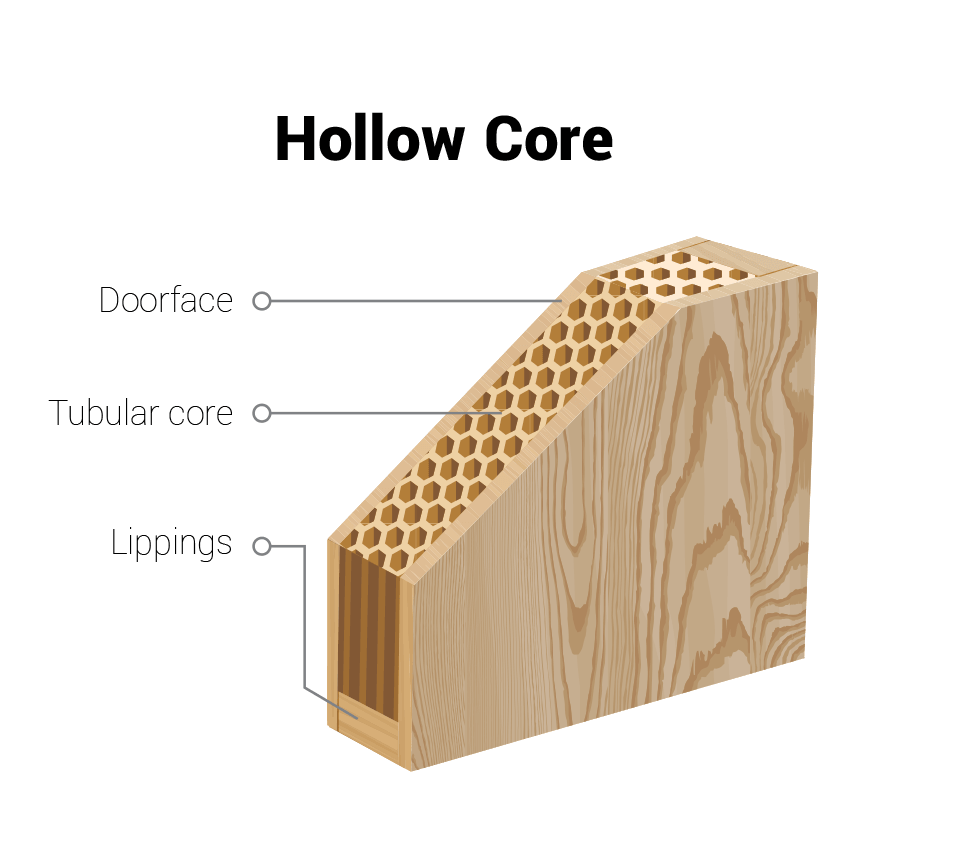
Usually, it’s not literally empty. Hollow-core doors are made with an internal frame and a lightweight core structure (often in a honeycomb design to maximise stability) that supports the outer facings, rather than being one solid slab of timber. That is what keeps them lighter and more economical than denser door types.
This is where things get more interesting for savvy buyers.
A semi-solid or middleweight moulded door sits between a lightweight hollow-core option and a denser solid engineered timber design. For Climadoor, this means a wider-framed moulded construction that creates a heavier, more substantial feel while still keeping the price more accessible than a fully solid core alternative.
That is a very useful middle ground. It gives you the cleaner, uniform appearance of a moulded door, but with more presence in the hand and a tougher day-to-day feel than the most basic budget options. For a homeowner upgrading doors across a family house, that can be exactly the sweet spot they are looking for.
It also tends to make more sense from an installer point of view. Better-defined lock block positions, sensible trimming allowances and a more robust feel can all make the difference between a door that feels purely price-led and one that feels properly thought through.
For many homes, yes. It can offer a noticeably sturdier feel than a lightweight hollow-core door without moving all the way into the cost and weight of a premium solid-core product. That makes it particularly appealing for everyday rooms where you want better feel and durability without over-specifying.
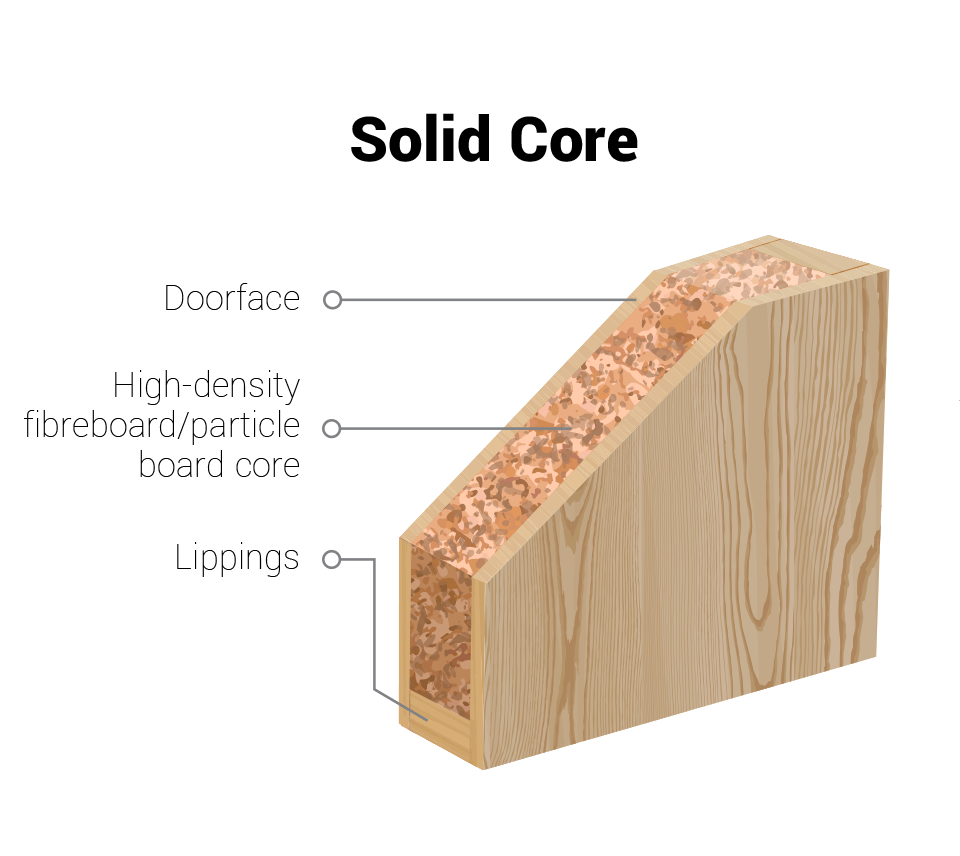
For these doors, we use a solid engineered oak core, formed by binding layers of oak together into a stable core, before applying an oak veneer to the outside. The result is intended to deliver the warmth and character of oak, but with better stability than a one-piece solid timber slab.
Climadoor doors are finished with a generous 0.6mm real wood veneer, giving them the natural look and texture of timber while still offering the stability benefits of an engineered construction. Depending on the style of door, we use a mix of crown-cut and quarter-cut veneers, this allows the grain pattern to complement the overall design, whether that means a more decorative, characterful appearance or a cleaner, more uniform look.
The veneer is bonded using urea formaldehyde adhesive, helping to create a secure, consistent finish across the door face that’s sturdy and stands up well to daily use. Together, these details play an important role in giving Climadoor doors their refined appearance and dependable build quality.
That kind of engineered construction is one reason solid-core doors often feel more premium. They usually offer more weight, more substance against internal stresses and a more robust impression in use. They can also suit buyers who want their internal doors to feel more in keeping with the overall spec of a better-quality renovation, extension or self-build.
Solid core does not mean every door is identical, though. The exact makeup still varies depending on the range, finish, glazing format and intended performance. But in broad terms, a solid engineered core is there to improve feel, durability and long-term confidence.
They are often better for buyers who want a heavier feel, greater durability and a more premium finish. They are not automatically the right door for every project, but they are usually preferred where quality, soundproofing, energy-efficiency and general long-term performance matter more than keeping cost and weight to a minimum.
Lippings are the solid timber edges around the door leaf and they matter far more than they get credit for.
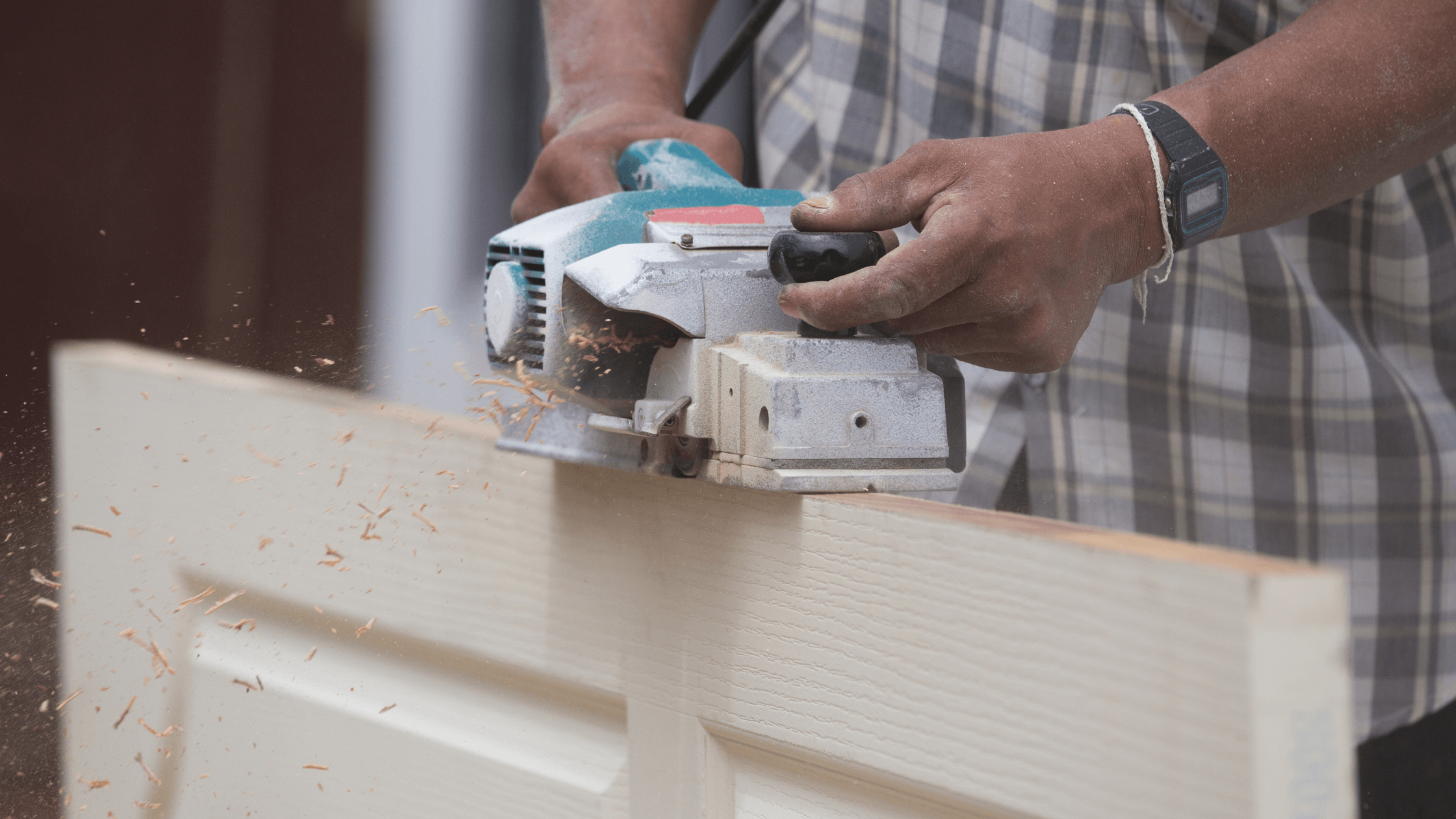
They protect the edges of the door, help create a cleaner finished look and play a major role in trimming allowances. If you need to take a few millimetres off a door on site for smooth operation, it’s the lipping that gives you that flexibility.
For installers, lippings are one of those details that can save a job from turning awkward. For homeowners, they are one of the reasons some doors are easier to fit neatly in older, less-than-perfect openings.
There is no one-size-fits-all answer. It depends on the exact construction and the manufacturer’s allowance for that model. Standard internal doors and fire doors often have different trimming limits and exceeding them can affect performance, appearance and warranty. Some internal doors can be trimmed by as much as 28mm, but that is a broad range-level statement rather than a universal allowance for every individual product, so the individual product specification is the one to trust when you need the real fitting limit.
Fire door guidance is especially clear that alterations should not undermine the tested performance of the doorset.
Climadoor has worked hard to offer generous lippings where possible, specifically as a practical fitting benefit.
Like with most manufacturers, the useful thing to know with Climadoor lipping allowances is that they are not one fixed rule across the whole range. They vary by construction type, thickness and whether the door is fire rated as mentioned before.
For many standard non-fire Climadoor interior doors, a common set-up is 10mm lippings with trimming of up to 6mm from any edge. A good example is the Cottage Oak Prefinished Internal Door, which is one of our most popular internal door styles, the 10mm solid lippings and a maximum trim of 6mm on the long edge and 6mm on the short edge essentially means you can trim up to 12mm in height or width.
For many Climadoor FD30 fire doors, the allowance is typically more controlled but still generous, with 18mm lippings and trimming of up to 12mm from any edge, the White Smooth Mexicano Fire Door being another popular example.
Some non-fire solid-core timber doors in the Climadoor range allow even more trimming because the style allows for larger lippings. For instance, the Islington Clear Pine 4 Panel Internal Door has 20mm lippings and a maximum trim of 16mm on the long edge and 16mm on the short edge, meaning an overall trim of 32mm from height or width. In the same range, the fire-rated versions revert to 18mm lippings and 12mm from any edge, which is a decent illustration of how the allowance changes between standard and FD30 versions of the design, so this is definitely something to also be aware of when specifying.
A lock block is the reinforced area inside a door where handles, latches and locks can be fitted securely.
This matters most on moulded and glazed internal doors, where not every part of the stile or edge will necessarily take door furniture in the same way as a fully solid core door. If a door includes a proper lock block, it gives the installer a defined fixing area and can allow the use of more standard ironmongery.
That is particularly useful on heritage-style and glazed designs, where aesthetics can sometimes create installation compromises. A well-positioned lock block makes life easier on site and reduces the need for specialist hardware workarounds.
Because it gives you a reinforced section for fitting latches and handles securely. In real-world terms, it helps avoid guesswork on site and can make a more design-led interior door easier to install using standard hardware.
FD30 fire doors are made very differently from standard internal doors because they’re built to provide a specific level of fire resistance.
Most internal fire doors are rated FD30 and provide 30 minutes of fire protection, this tends to be enough for residential properties. The fire resistance means a denser, fire-rated core, together with compatible glazing where relevant, the right frame preparation, suitable seals and appropriate hardware.
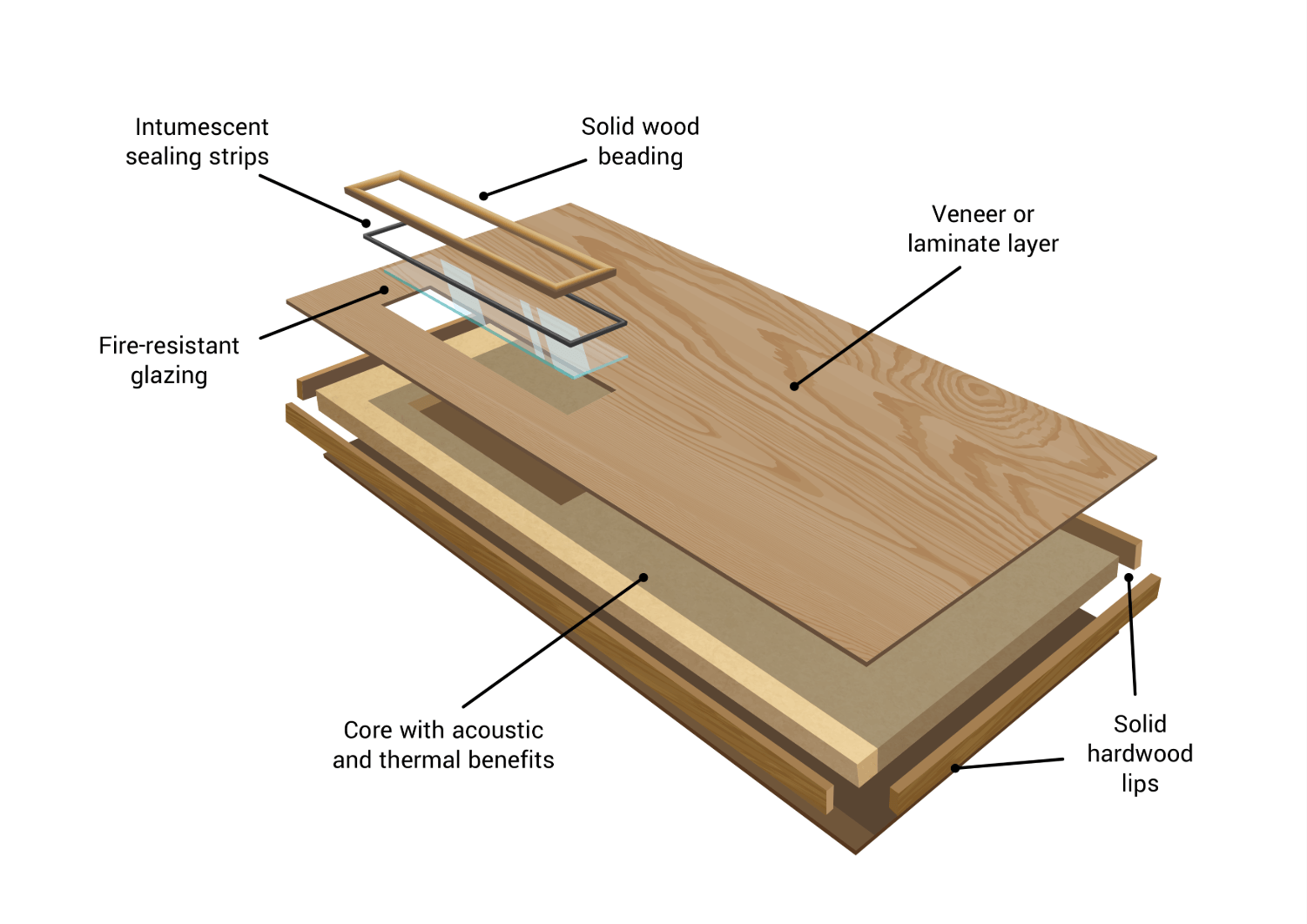
From a Climadoor perspective, an FD30 fire door is built with an ultra-dense engineered solid-core construction rather than a lightweight one. Depending on the range, that core may be a high-density particleboard fire core or, in the slimmer 35mm models, an MGO sandwich board core.
Over that sits the visible face layer, which may be a real oak veneer or a primed moulded skin, while the perimeter is reinforced with timber lippings that control the allowable trimming on site. Intumescent strips and smoke seals then complete the fire-resisting build-up, meaning the door’s performance comes not from one component alone, but from the core, facings, edges, seals and compatible hardware all working together as a tested FD30 assembly.
Glazed fire doors add another layer of engineering. Fire doors may be made using a combination of materials including glass, timber, aluminium and steel, and the fire-door system must still work as a whole. So when Climadoor sells a glazed FD30 door, the glass is not just decorative. It has to be part of a fire-rated assembly compatible with the core, framing and seals.
The most important thing to understand is that a fire door is not just a door leaf. UK building regulations stress that performance depends on the complete doorset and its condition.
Government fire door guidance says checks should consider the door, frame, glazing, hinges, other ironmongery, door gaps, strips and seals and the self-closing device where one is required.
So while a standard internal door is chosen mainly for style and everyday performance, an FD30 door is a safety product first. It still needs to look good in a home, but it has a much more demanding job to do.
Off the back of this, a useful, slightly more technical point to add is that Climadoor does not treat all internal fire doors as a one-thickness-fits-all category. Our range includes both standard 44mm FD30 fire doors and a more specialist 35mm thick FD30 fire door option for projects where existing linings are too slim for a typical fire door.
The 44mm option is effectively Climadoor’s standard internal fire door thickness and one you’ll typically find across the market. Alongside that, the 35mm FD30 range is aimed at retrofit situations where a full 44mm fire door may not suit the existing lining. They’re designed to fit standard UK internal door linings and are intended to deliver FD30 protection in a slimmer format, without needing to replace the whole frame. These slimmer doors are built with the same attention to detail and robust fire-resistant cores as the 44mm range.
If something more robust is needed, Climadoor also offers a select range of FD60 rated fire doors, these doors take things one step further in terms of fire resistance, offering up to 60 minutes of protection. This levelling up of protection does mean a thicker door is needed, with 54mm being the standard thickness for an FD60 fire door.
As mentioned above, FD30 means the fire door is intended to provide 30 minutes of fire resistance when correctly installed as part of a suitable doorset.
There are a number of other options to choose from in the market too. From FD20, which offers 20 minutes of fire resistance, right up to FD120 which has been tested to withstand fire and smoke for up to two hours. These doors would typically be found in large commercial properties rather than residential.
They do, but the exact requirement depends on the tested specification and the location.
Government fire door guidance says that if intumescent strips and smoke seals are present, they should be undamaged, make contact correctly and not be painted over. It also notes that older doors may still be acceptable without them, depending on the fire risk assessment and the door’s original basis of compliance.
That is why the safest advice is always to follow the manufacturer’s instructions and the relevant fire test evidence for the exact door set you are installing.
They expand when exposed to heat, helping to seal the gaps around a fire door during a fire. Smoke seals help limit the movement of smoke. Together, they are part of how many fire doorsets achieve their intended performance.
This depends on the property layout and the applicable regulations. One of the most common places you’ll need one is on integrated garages. That said, the current Approved Document B building regulations guide on fire safety remains the relevant statutory route for fire safety matters in the UK. For loft conversions, multi-storey layouts and garage-to-house separation, it is always best to check the current guidance and building control position for the individual project rather than relying on rules of thumb.
Likewise, apartment blocks and HMO’s are subject to further regulations, so it’s always best to make sure you’re clued up before diving into specifying.
The big takeaway is that style is only half the story.
If you want to choose well, you need to understand what is behind the finish. Hollow-core and lighter moulded constructions can work brilliantly where value and weight are the priority. Semi-solid options offer a more substantial middle ground. Solid engineered core doors bring extra weight, quality and confidence. FD30 fire doors are built for a different performance level altogether and need to be treated as such.
That is why construction details matter so much, they explain why one door feels better than another. why some are easier to fit, why some can be trimmed more confidently and why fire doors cannot be treated like ordinary doors.
For an informed upgrader, that is where the real value lies.
Have a question about door construction? No worries! Just give our team of door experts a call, they’re always happy to discuss any queries you might have.


Specialist suppliers of high quality, internal and external folding and french doors. Buy direct for the best price.
Delivery to most mainland UK postcodes within 3-7 working days. Free delivery on orders over £750.
The Climadoor
Guarantee Promise
All of our doors and hardware are guaranteed for ten years against the occurrence of manufacturing faults.
0203 846 0345
Telephone: 0203 846 0345 Email:
[email protected] ©Climadoor Ltd 2021. All rights reserved.
Showroom: Unit 2 Sinfin Central Business Park, Sinfin Lane, Derby DE24 9HL. Buy online or via selected stockists: Vibrant
Doors / Express Doors Direct / Vivid
Doors
Terms & ConditionsRefunds & ReturnsOur Guarantee PromisePrivacy PolicyClimadoor Voucher CodesImage Share - Terms & Conditions Sitemap

Please contact us for details regarding our FSC® certified products.
Rated 4.3 out of 5 by our customers from 944 reviews.